
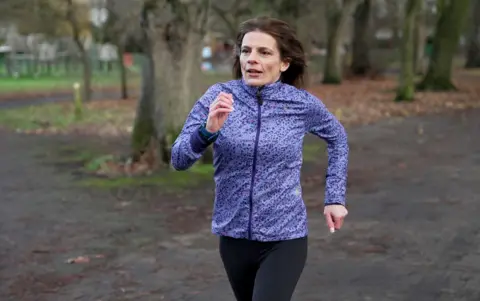
An atmosphere of feeling of anticipation. I can see the frosty air exhaled by my rivals as they perform the "starting line" jiggle on the start line.
A swift flick of the hips.
I'm lined up for my local weekly parkrun event and I'm serious. The countdown begins...
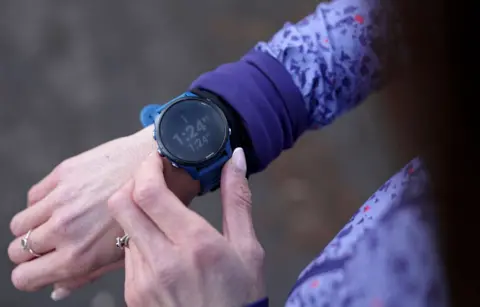
Wait a second. I must start my tracker. The same goes for the guy alongside me.
The person in the line expresses impatience. I won't start until… there! Connection established, away I go.
In the mele, it's difficult to find a wrist without a fitness tracker on it. And this isn't only us athletes who use them.
We're witnessing a thriving, multi-billion dollar sector. Names like Apple Watch are prevalent, each with an broad range of various devices to suit a spectrum of lifestyles. According to how feature-packed the model you select, costs can range from an affordable sum to a small fortune.
"I find it infuriating, I'm unable to switch off."
"It reassures me… It acts as a supporter encouraging me."
"I wish it wouldn't say about a poor sleep."
Just some of the reactions I've had from other smartwatch wearers when I ask what they their opinion is on theirs.
The Monitoring Conundrum
My current opinion on my own device? Currently, annoying. It's telling me my speed is wrong, making me wonder whether the trees I'm passing under are interfering with my satellite signal.
A vast number of us strap these little monitors onto our arms and use them all day and night, ostensibly unconcerned with the fact they're continuously monitoring us.
Long past are the days when we used them exclusively to give us an rough count of our pedometer reading. Now, they can measure our sleep quality, heart rate, oxygen saturation, our VO2 max.
It's difficult to find a bodily function they don't track.
But do they do what they say they do? And are the statistics we analyse a true reflection of the truth? Do they improve our mental and physical wellbeing, or do the plethora of measurements and cheerleading alerts just contribute to our daily stresses?

Addiction or Aid?
"I do get a quite obsessed with mine," an individual reveals.
While she loves how her device tracks her runs, she finds some of its other functions "excessive" at times - a feeling first discovered during a major life event.
Before she realised she could change its configuration, her smartwatch constantly alerted her she was failing to be energetic enough. Later on, the watch frequently reports her she's had a restless night.
"I have a young baby, I don't need to be told my sleep was poor," she says. "I know that only too well."
Why doesn't she just remove it?
"I suppose I could, perhaps, but I've got this push-pull dynamic with it," she says. "I love it for its fitness insights, I sometimes question whether the myriad other functions it can now do is maybe too much for me."
Inside the Device
Different brands of smartwatch has its own proprietary way of measuring your bodily functions and processing your data, but the most use optical sensors on the underside of the watch.
They commonly emit small, green LED lights onto your wrist which can detect pulsation, detecting your pulse rate. Higher-end devices measure changes in the electrical current that runs through the skin to gauge your recovery state.
A Fine Balance
One expert says that for most people for smartwatches, it's a "delicate equilibrium" - while the ever-evolving tech could potentially aid early diagnosis, "spotting abnormalities before we notice anything", it could also turn us watch wearers into the "worried well".
He points out that some of the latest wearables can conduct tests like medical-grade monitoring, which continuously monitor how healthy the heart is. They can notify if someone is experiencing an irregular rhythm, where there is abnormal impulses in the heart causing an arrhythmia.
This does not automatically signal someone is imminently going to suffer a cardiac event, but it can give an early warning they might be more at risk of a blood clot in the future.
But how to make sense of these numbers is complicated. The expert fears that as further capabilities are introduced, people may find it hard to fully understand their data.
"I have some doubts that being able to monitor so many metrics is such a good idea," he says.
A health researcher studying cardiology agrees. A study into the influence of wearable tech on a specific group of individuals with health issues suggested a noticeable percentage of those who were given devices to monitor their heart health experienced heightened worry and were "far more likely to use healthcare resources".
She identified a cycle with her patients - they saw a concerning reading on their watch. They felt anxious. Their BPM rose. They got more worried. They checked again, and their anxiety went up again.
"Upon viewing numbers about ourselves that we can't properly interpret then, naturally, we are going to become concerned," the psychologist says. "We check, we check again - it becomes a vicious cycle."
